Cooperatives Highlight Their Cultural Power at UNESCO MONDIACULT Side Event in Barcelona
December 2025
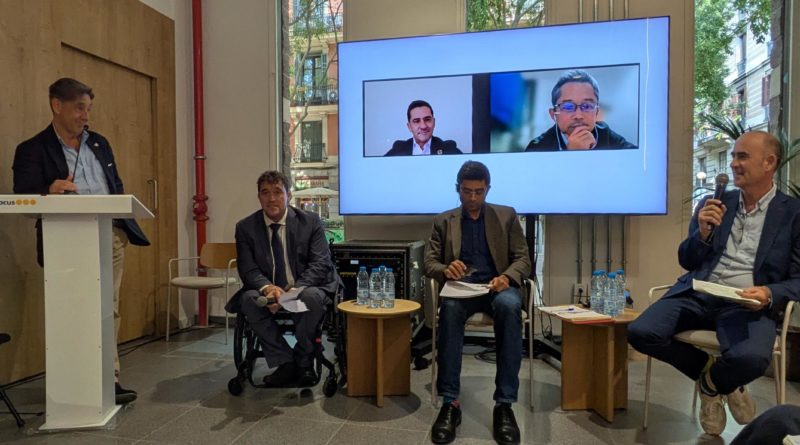
On 26 September 2025, CICOPA participated in the UNESCO MONDIACULT side event “Cooperatives in Culture for Diversity, Cultural Rights and Decent Work”, co-organised by ICA and ASETT and hosted by Abacus Cooperative in Barcelona. The gathering brought together cooperative leaders, cultural practitioners, policymakers, and international organisations to explore how cooperatives are shaping the cultural landscape and contributing to sustainable development.
Held at Casa Abacus, the event featured a rich programme of discussions on the role of cooperatives in sustaining cultural diversity, supporting creators, and strengthening democratic participation in cultural life. Speakers from around the world including representatives from the ICA, Cooperatives Europe, ILO, ASETT, Basque, Catalonian and Spanish Government and cooperative representatives from Brazil, Japan, UK, Spain and Italy highlighted how cooperatives are pioneering historic and new approaches in the cultural and creative sectors.
Participants underlined that cooperatives are far more than economic entities: they are cultural agents deeply rooted in their communities. They carry traditions, revitalise local knowledge, and foster social cohesion through democratic governance. Several speakers showcased concrete examples of cooperatives managing cultural venues, safeguarding intangible heritage, supporting local creators, and ensuring that cultural activities remain accessible and community-driven.
The event also emphasised that cooperatives are uniquely positioned to address precarious conditions in the cultural and creative industries. By offering shared ownership, decent work, and collective security, they create environments where artists, cultural workers, and educators can thrive.
In her concluding remarks, CICOPA Secretary General Diana Dovgan highlighted three key messages emerging from the discussions. First, cooperatives provide innovative and equitable models in the cultural and creative sectors, ensuring that creators retain ownership of their work and enjoy dignified working conditions. Second, cooperative education plays a crucial role in building cultural literacy, democratic participation, and solidarity which are essential foundations for inclusive societies. Third, cooperative heritage is a living resource: through libraries, theatres, museums, and craft-based cooperatives, members actively preserve and transmit cultural knowledge across generations.
Looking ahead, she stressed that the United Nations International Year of Cooperatives 2025 offers a pivotal moment to strengthen the visibility of cooperatives as cultural actors and to ensure that culture is fully integrated into sustainable development agendas. “Culture must never be seen as secondary,” she affirmed. “Cooperatives show that cultural rights, diversity, and decent work are inseparable and essential for fairer, more creative societies.”
CICOPA leaves the event with renewed determination to continue advocating for cooperatives as indispensable cultural actors and to collaborate closely with partners including the ICA and ASETT to advance a cooperative vision of sustainable cultural development worldwide.